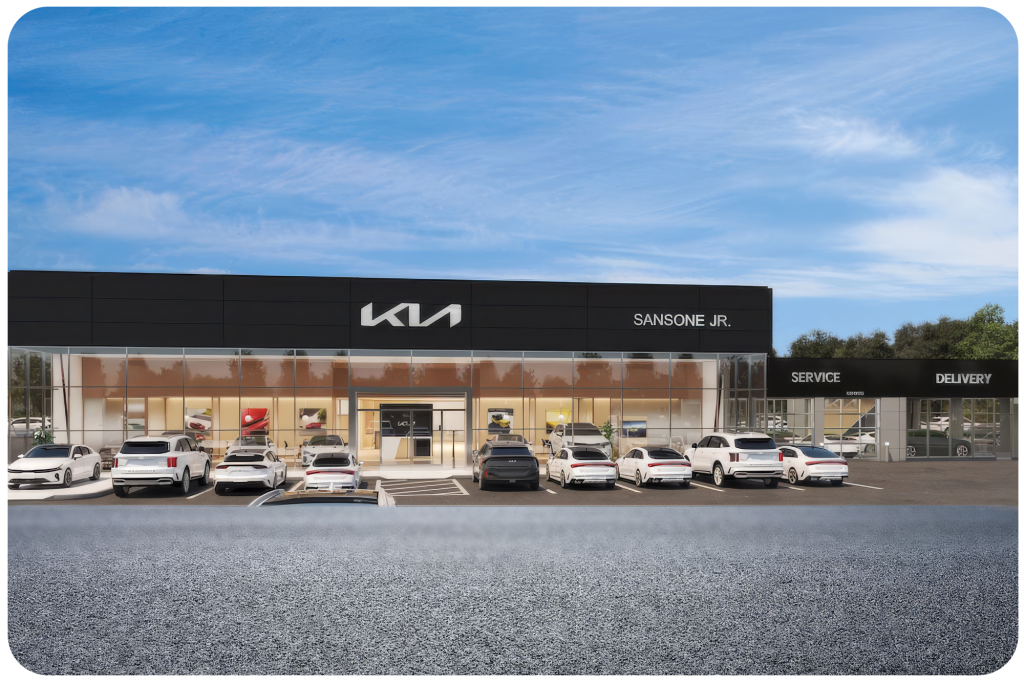
The strategy behind becoming a Top 5 Kia dealer in the Northeast with Car Wars
In just five months, Keyport Kia significantly improved how calls were answered, coached, and followed up, reducing missed opportunities and driving measurable performance gains.
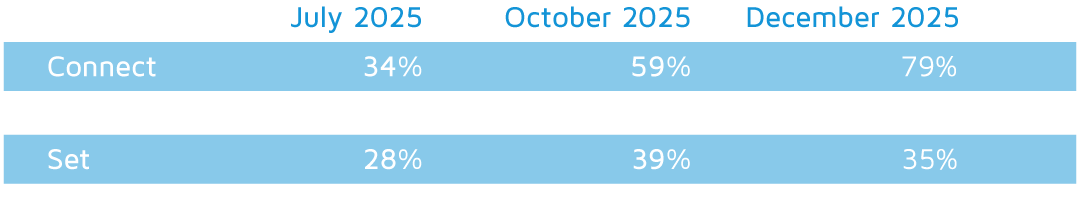
Connect
34%
79%
Set
28%
35%
The Challenge
When Sansone Jr’s Keyport Kia opened in late June 2025, the team quickly turned its attention to how phone activity would be handled as the store ramped up. With call volume increasing and new team members coming on board, it became critical to ensure calls weren’t just tracked, but consistently followed up on.
General Manager, Paul Sansone III (PS3), brought experience from a sister store that relied on a competitor’s call tracking solution. While calls were visible, outcomes weren’t always surfaced in a way that made follow-through easy. Missed appointments and coaching opportunities could be identified, but they weren’t consistently delivered to the right people at the right time.
At Keyport Kia, the focus shifted to execution. The team needed missed opportunities surfaced clearly, coaching insights pushed directly to salespeople, and reporting that supported daily accountability without adding manual work for managers.
The challenge wasn’t whether the phone mattered – it was having a system that made call insights immediately actionable as the dealership grew.
The Approach
As call volume increased and Keyport Kia rolled out Car Wars, the numbers made it clear things were getting missed. Here’s how they turned it around.
1 Defined Clear Call Routing and Ownership
One of the first changes Keyport Kia made was defining exactly how inbound calls should flow through the store.
Sales calls were routed directly to the sales team rather than a BDC, with calls ringing to all salespeople to improve pickup and reduce unnecessary transfers. When a caller asked for a specific person, the call was not blindly transferred. The person answering the phone confirmed availability first and completed a warm transfer when possible, ensuring the caller was properly handed off rather than sent to voicemail. If the requested individual was unavailable, the call was handled immediately or intentionally forwarded, including forwarding to a cell phone when appropriate.
By eliminating blind transfers and clearly defining ownership by role and phone line, it became easier to see where calls were being answered and where breakdowns occurred.
2 Monitored Connect in Real Time and Acted Immediately
Instead of waiting to review Connect at the end of the month, the team paid attention to it as calls came in.
PS3 reviewed Car Wars data daily, monitoring unconnected calls as they happened. If multiple calls were missed by mid-day, the team addressed it immediately rather than waiting until the end of the week. Missed calls became something to fix in the moment, not something to explain later.
3 Made Missed Calls and Missed Appointments Actionable
Missed calls were designated as required follow-up.
When a call was missed, it was surfaced and sent directly to the appropriate team members. Missed opportunities were routed to both the BDC team and desk managers, ensuring accountability and follow-through.
Rather than asking “how many calls were missed,” the focus shifted to “which missed calls need to be worked right now.” This ensured customers who didn’t connect initially were contacted again and not lost due to silence.
4 Standardized Call Execution with CRISP
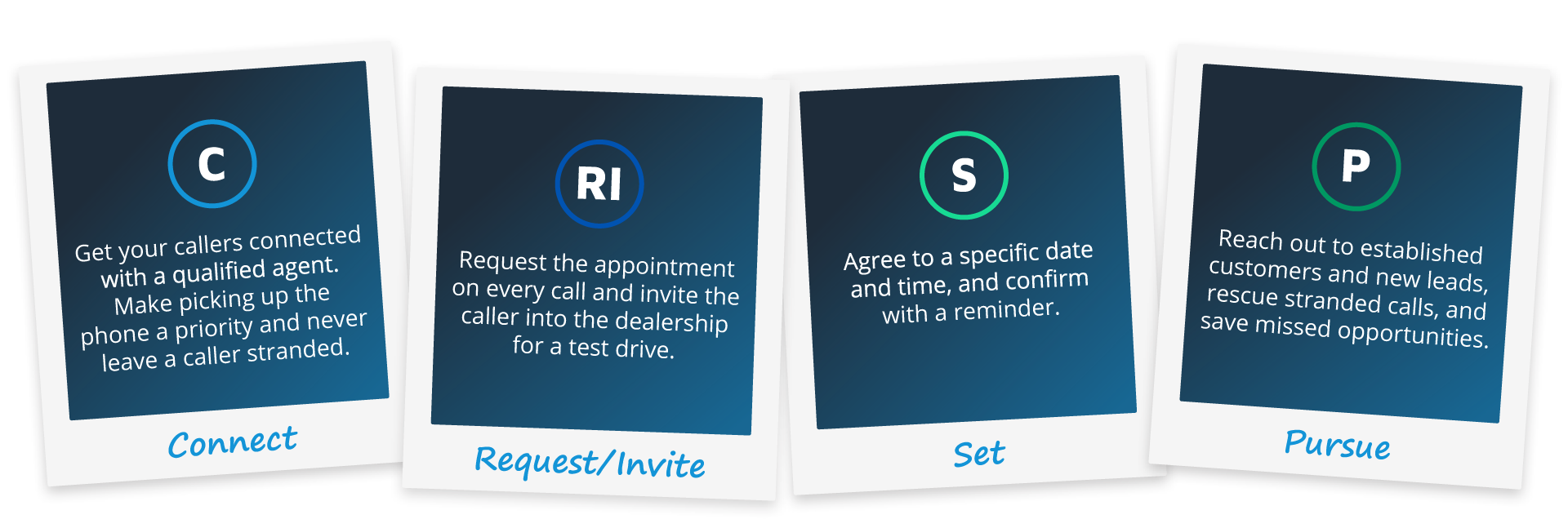
CRISP Certification became the standard for how calls were handled.
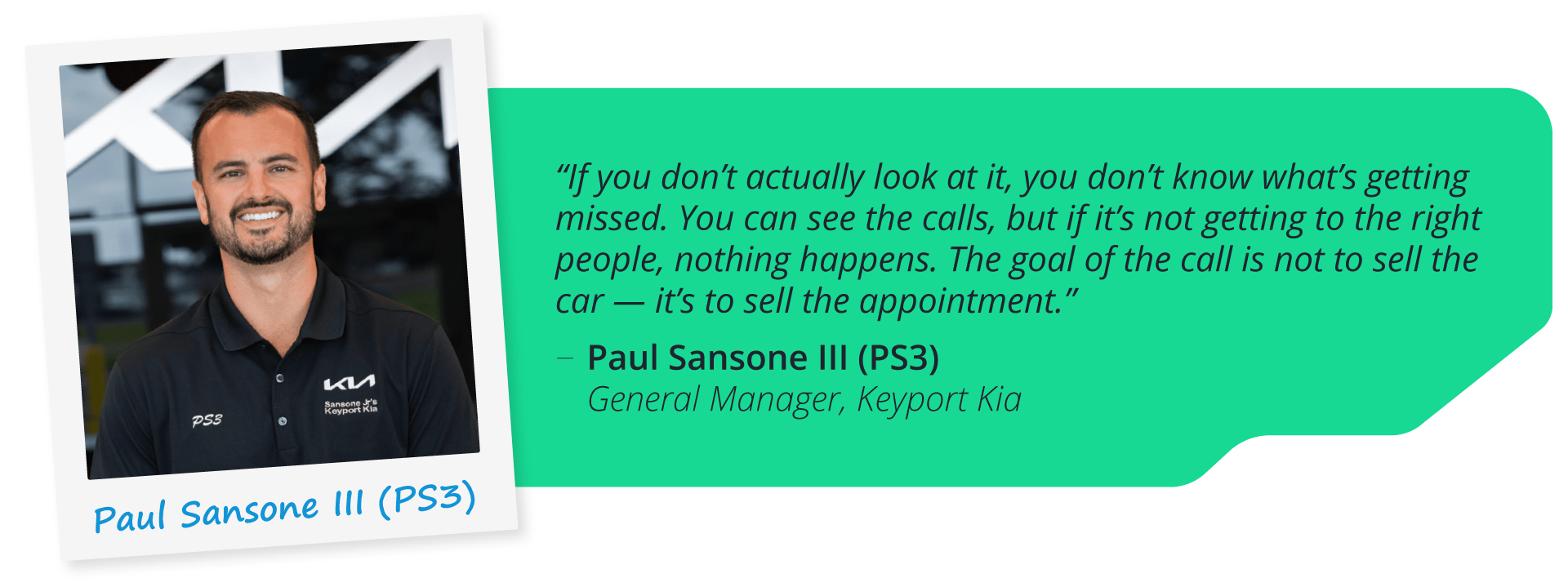
PS3 described CRISP as a reinforcement of something many reps knew but did not consistently execute. The goal of the call is not to sell the car, but to sell the appointment. Language, phrasing, and asking for the appointment were emphasized as non-negotiables.
CRISP Certification was tied directly to compensation. To receive a monthly bonus, sales staff had to be CRISP-certified and maintain certification. This ensured standards were taken seriously and reinforced consistently.
5 Used Call Recordings for Live Coaching and Team Training
Call recordings were actively used as training tools.
Rather than coaching privately or in isolation, PS3 regularly reviewed calls with the team. When a call did not go well, it was used as a group training moment. The team listened together, discussed what could have been done differently, and aligned on expectations.
6 Embedded Call Data into CRM Workflow
Keyport Kia used the Car Wars and DriveCentric integration to tie call activity directly to CRM workflows.
Salespeople used click-to-call from DriveCentric so calls were automatically logged and recorded. This eliminated disputes over what was said on calls and ensured conversations could be reviewed for training and accountability.
PS3 regularly compares DriveCentric call activity to Car Wars click-to-call data to ensure calls were being made correctly and tracked consistently.
This integration made phone performance part of daily operations rather than a separate system to manage.
7 Used Reporting to Measure Individual Performance
Staff Activity Reports were reviewed daily and shared with managers.
Rather than focusing only on total call volume, PS3 paid close attention to connected calls that did not result in appointments. These calls became coaching opportunities and were reviewed to understand where execution broke down.
8 Extended Coverage with Cari
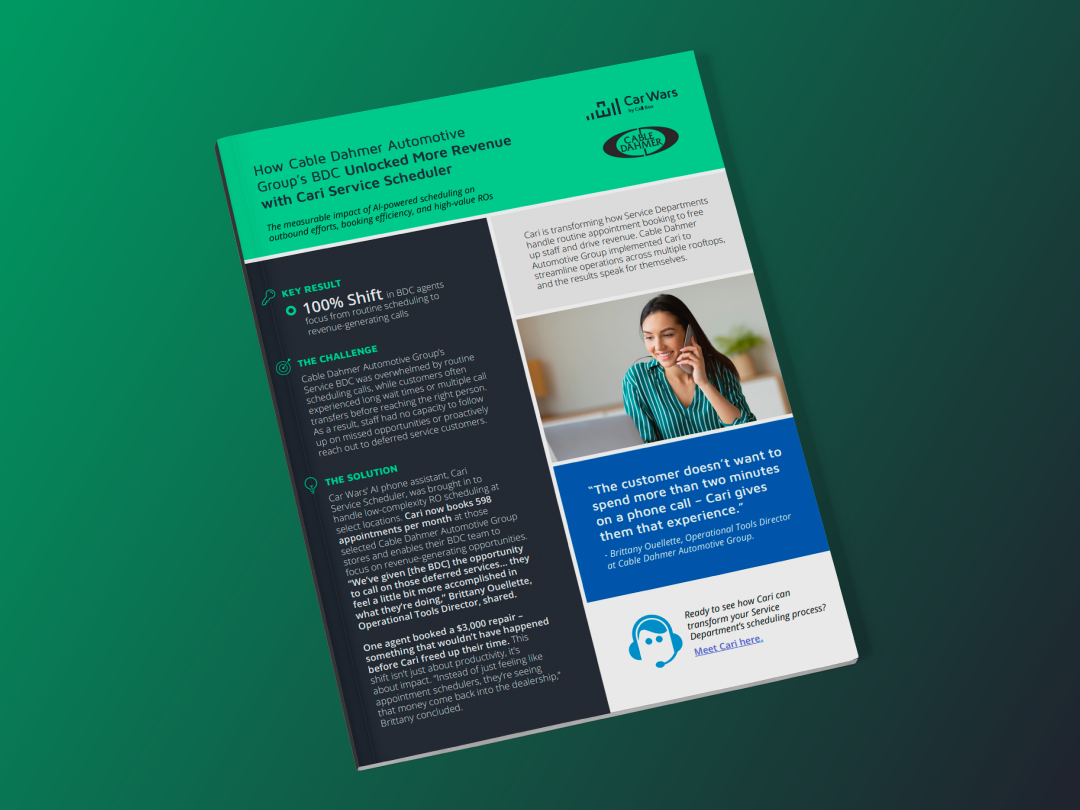
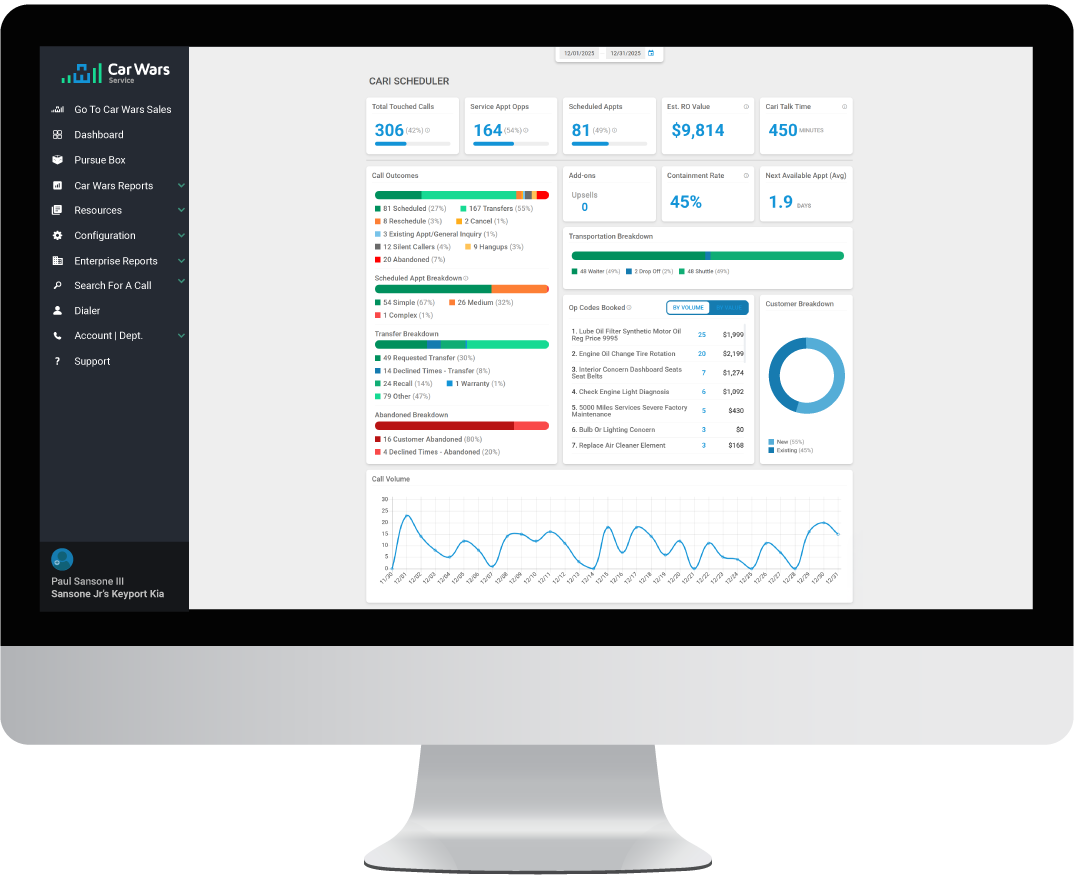
Cari Scheduler was implemented in the Service Department to handle routine scheduling requests.
By allowing Cari to manage simple service appointment scheduling, service receptionists were able to focus on proactive outbound follow-up and higher-value customer interactions. This reduced time spent on repetitive calls while maintaining responsiveness for customers.
Cari after-hours handling was recently activated, providing visibility into calls coming in outside of business hours and creating a foundation to capture additional service opportunities over time.
Keyport Kia also recently implemented Cari Receptionist to help ensure callers are greeted consistently and routed appropriately when live staff are unavailable.
Why This Worked
Keyport Kia focused on execution. By defining call routing, eliminating blind transfers, monitoring Connect in real time, requiring follow-up on missed calls, tying CRISP Certification to compensation, and embedding call data into daily workflow, phone performance became measurable and manageable – and remains part of how the store operates today.
That discipline drove sustained improvement across every CRISP metric and supported the dealership’s rapid rise as a top-performing Kia store in the region.
The Result
Five months after implementing structured call routing, execution standards, and coaching, Keyport Kia saw measurable improvement across every CRISP metric.
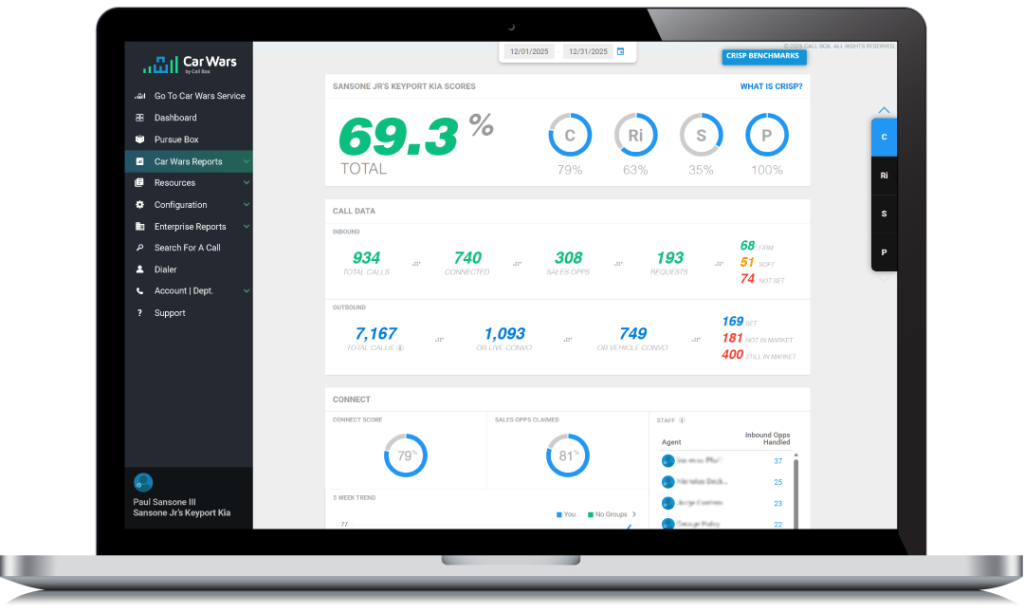
Connect
34%
79%
Clear call routing, defined ownership, and warm transfers more than doubled the store’s Connect rate.
Request / Invite
50%
63%
Standardized call execution through CRISP Certification increased the number of connected calls that resulted in an actionable request.
Set
28%
35%
Call Coaching reinforced when and how appointments were asked for, improving consistency across the team.
Pursue
14%
100%
With real-time visibility into missed calls and appointments, pursue opportunities were surfaced, assigned clear ownership, and consistently followed up on.
*Results achieved within five months of store opening.
Why The Stack Matters
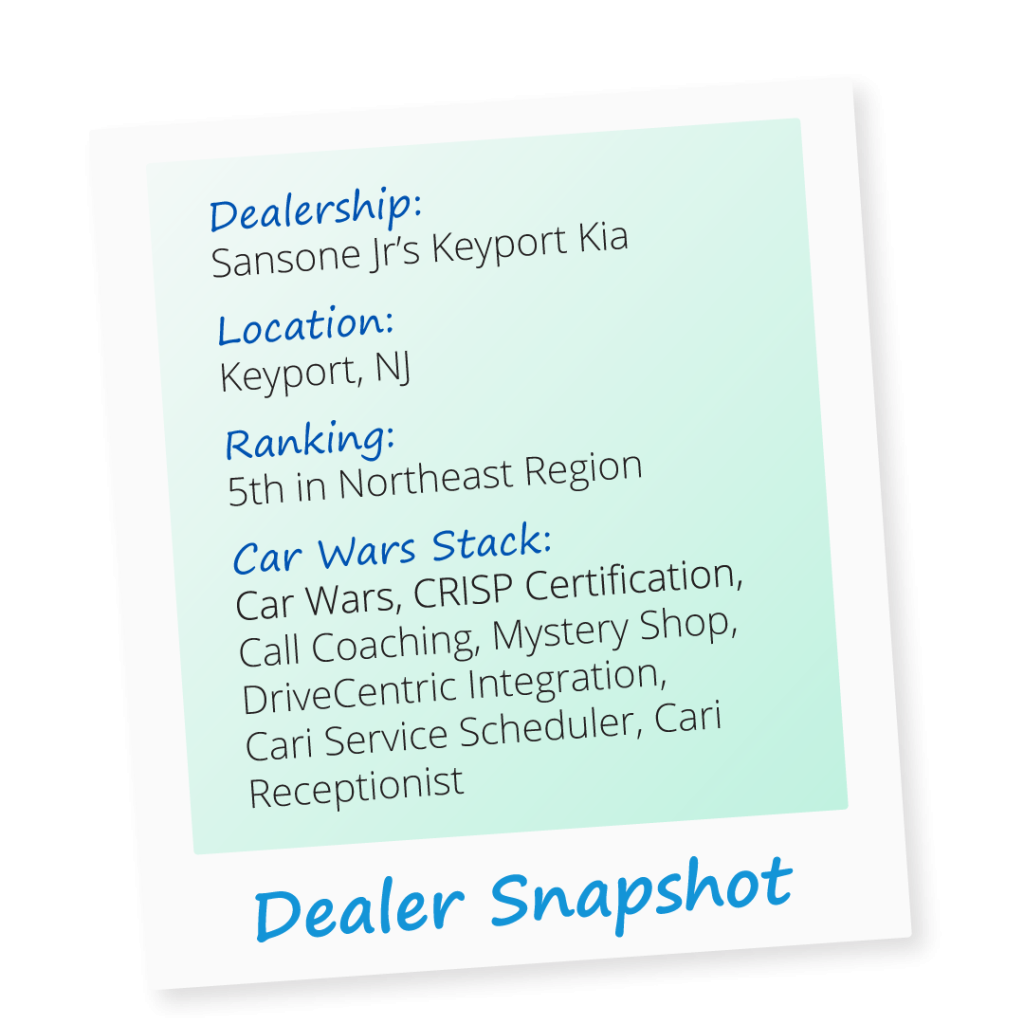
Having CRISP metrics, Call Coaching, Mystery Shop Scorecard, DriveCentric integration, and Cari in one platform allowed Keyport Kia to connect insight to action. Missed calls, coaching opportunities, and follow-up lived in one place, making issues easier to see and easier to fix.
By treating phone performance as an operational discipline, Keyport Kia turned missed calls into measurable growth. Talk to Sales here to see how Car Wars can help your dealership turn missed calls into measurable growth.